Thread Registration
Understanding thread registration lifecycle in DEBRA+.
State Machine
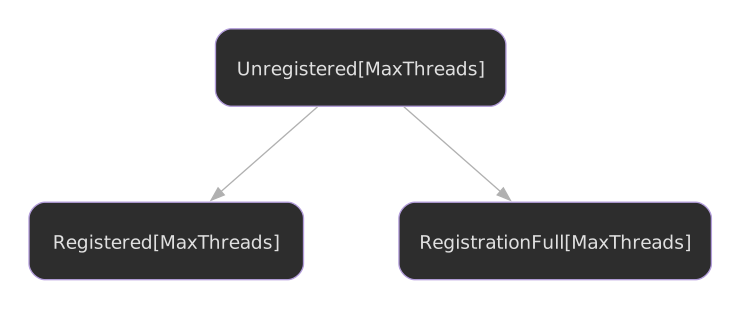
Overview
Each thread must register with the DEBRA manager before performing pin/unpin operations. Registration allocates a thread slot and provides a handle for all subsequent operations.
Registration Process
Registration performs several steps:
- Search for an unused slot in the thread array
- Claim the slot by setting the thread ID
- Initialize the slot's epoch and flags
- Return a handle containing the slot index
Thread Limits
The manager is created with a compile-time maximum thread count:
Attempting to register more threads than the limit will raise DebraRegistrationError.
Multi-Thread Example
The following example demonstrates multiple threads registering and using DEBRA:
Example source not mirrored
The examples/thread_registration.nim source was part of the standalone
nim-debra repo and is not included in this frozen mirror. View it at
the upstream link below, or see the live
SMR guide for the current lockfree/smr/nebr API.
:material-file-code: View full source
Per-Thread State
Each thread slot maintains:
- epoch: Current/pinned epoch
- pinned: Is thread in critical section?
- neutralized: Neutralization flag
- threadId: Thread identifier for signaling
- limboBags: Chain of retired objects
Best Practices
- Register once per thread: Don't register multiple times
- Keep handle alive: Store the handle for the thread's lifetime
- Don't share handles: Each thread needs its own handle
- Respect limits: Don't exceed MaxThreads parameter
Current Limitations
Thread Slot Lifetime
Thread slots are held for the thread's lifetime. Once a thread registers, its slot remains occupied until the manager is destroyed. There is currently no explicit deregistration API.
If a thread exits after registration, its slot remains allocated and cannot be reused until the entire manager shuts down. This means the effective thread limit is determined by the peak number of threads that register over the manager's lifetime, not the number of concurrent threads.
Implication: Plan your MaxThreads parameter based on the total number of threads that will register throughout your application's lifetime, not just the concurrent thread count.
Troubleshooting
"Maximum threads already registered"
All slots are occupied. Either:
- Increase
MaxThreadswhen creating the manager - Reduce the total number of threads that register over the application lifetime
- Check for thread leaks or unnecessary thread creation
Next Steps
- Learn about pin/unpin lifecycle
- Understand retiring objects