Reclamation
Understanding safe memory reclamation in DEBRA+.
State Machine
Overview
Reclamation is the process of safely freeing retired objects. Each registered
thread reclaims its own retired objects from its own thread-local limbo bag
list. There is no cross-thread reclamation: the bag list is mutated by the
owning thread (via retire) without synchronization, so another thread cannot
walk it safely.
Per-thread reclamation
Pass your ThreadHandle to reclaimStart(handle) (or reclaimNow(handle)) to
walk and free your own thread's retired objects. A thread that retires but
never calls reclaim leaks its bags. The recommended pattern is to fold a
reclaim attempt into your hot path on a cadence (e.g. once every N retires);
see the epoch advancement guide.
If a thread stalls or exits while still pinned, the neutralization mechanism forces it to unpin so the global epoch can advance, but it does not free that thread's already-retired bags. Drain your bags before exiting the thread.
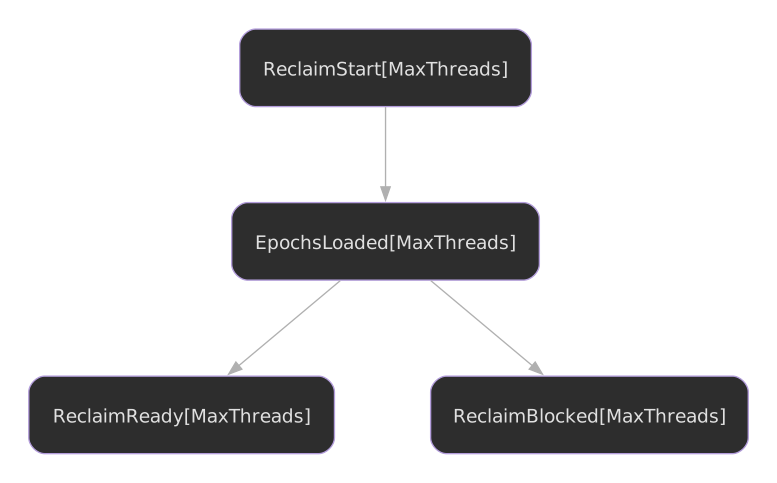
Reclamation Steps
- Start: Begin reclamation process for your handle's slot
- Load epochs: Read global epoch and all thread epochs
- Check safety: Determine if any epochs are safe to reclaim
- Try reclaim: Walk this thread's own limbo bags and free eligible objects
Epoch Safety
The safe epoch is the minimum of all pinned thread epochs. Objects retired in epoch E are safe to reclaim if E < safeEpoch - 1.
Periodic Reclamation
Attempt reclamation every N operations to amortize the cost:
Example source not mirrored
The examples/reclamation_periodic.nim source was part of the standalone
nim-debra repo and is not included in this frozen mirror. View it at
the upstream link below, or see the live
SMR guide for the current lockfree/smr/nebr API.
:material-file-code: View full source
Background Epoch Advancement
A dedicated background thread cannot reclaim other threads' retired objects:
each thread reclaims its own. A background thread is still useful for driving
the global epoch forward (manager.advance()) while workers continue to
retire and reclaim on their own slots.
Example source not mirrored
The examples/reclamation_background.nim source was part of the standalone
nim-debra repo and is not included in this frozen mirror. View it at
the upstream link below, or see the live
SMR guide for the current lockfree/smr/nebr API.
:material-file-code: View full source
Blocked Reclamation
If safeEpoch <= 1, reclamation is blocked. This is normal when:
- All threads pinned at current epoch
- Only one epoch has passed since start
Options when blocked:
- Advance epoch: Trigger epoch advancement
- Wait: Try again later
- Neutralize: If a thread is stalled, neutralize it
Reclamation Scheduling
Too frequent: - Wastes CPU checking epochs - Most checks find nothing to reclaim
Too infrequent: - Accumulates memory - Longer pause when reclaim happens
Recommended: Every 100-1000 operations or every 10-100ms.
Performance Considerations
Reclamation cost:
- Load epochs: O(m) where m = max threads
- Walk bags: O(n) where n = retired objects
- Total: O(m + n)
Optimization tips:
- Batch reclamation: Don't reclaim after every operation
- Cadence helper: Use
handle.advanceEvery(n)plus a periodicreclaimNow(handle)call - Threshold: Only reclaim when enough objects accumulated
Next Steps
- Learn about neutralization
- Understand integration patterns