Integration
Integrating nim-debra with lock-free data structures.
Overview
This guide shows how to integrate nim-debra into lock-free data structures for safe memory reclamation.
Basic Integration Pattern
- Add manager reference to your data structure
- Register threads on initialization
- Pin during operations
- Retire removed nodes
- Periodically reclaim
Lock-Free Stack
A complete Treiber stack implementation with DEBRA+ reclamation:
Example source not mirrored
The examples/lockfree_stack.nim source was part of the standalone
nim-debra repo and is not included in this frozen mirror. View it at
the upstream link below, or see the live
SMR guide for the current lockfree/smr/nebr API.
:material-file-code: View full source
Lock-Free Queue
A complete Michael-Scott queue implementation with DEBRA+ reclamation:
Example source not mirrored
The examples/lockfree_queue.nim source was part of the standalone
nim-debra repo and is not included in this frozen mirror. View it at
the upstream link below, or see the live
SMR guide for the current lockfree/smr/nebr API.
:material-file-code: View full source
Typestate Composition
DEBRA is implemented using nim-typestates. This means you can compose DEBRA's memory safety guarantees with your own application-level typestates.
This enables "correct by design" algorithms:
- Your algorithm's states - Enforced at compile time (e.g., Empty/NonEmpty stack)
- DEBRA's protocol - Pin/unpin/retire sequence enforced at compile time
- Bridges - Connect your states to other typestates (e.g., popped items enter a processing pipeline)
Library Typestates Are Pluggable
When you import debra, you get access to DEBRA's typestates:
Unpinned[N]/Pinned[N]/Neutralized[N]- Epoch guard statesRetireReady[N]/Retired[N]- Retirement statesReclaimStart[N]/EpochsLoaded[N]/ReclaimReady[N]/ReclaimBlocked[N]- Reclamation states
Your code uses these directly. The compiler verifies you follow the protocol.
Example: Item Processing Pipeline
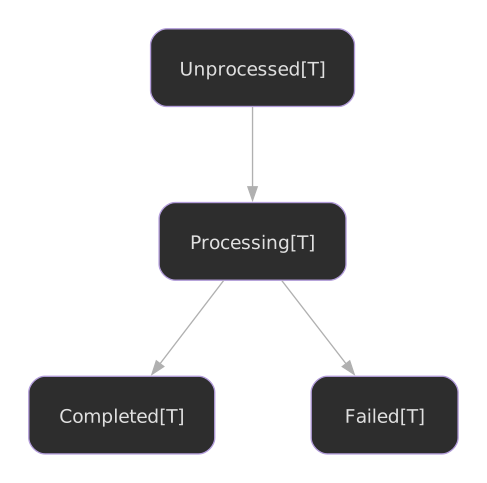
Define a typestate for processing items after they leave the data structure:
Example source not mirrored
The examples/item_processing.nim source was part of the standalone
nim-debra repo and is not included in this frozen mirror. View it at
the upstream link below, or see the live
SMR guide for the current lockfree/smr/nebr API.
:material-file-code: View source
Example: Stack with Typestate Composition
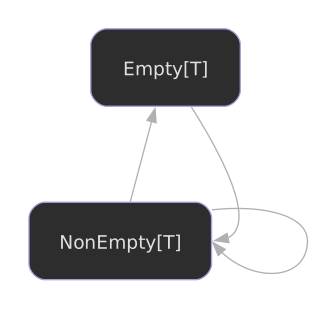
Combine stack states, DEBRA states, and bridges to the item processing pipeline:
Example source not mirrored
The examples/lockfree_stack_typestates.nim source was part of the standalone
nim-debra repo and is not included in this frozen mirror. View it at
the upstream link below, or see the live
SMR guide for the current lockfree/smr/nebr API.
:material-file-code: View source
Key Points
- Nested enforcement: DEBRA's
pin()/unpin()happens inside yourpush()/pop()- both are type-checked - Bridges connect state machines: Popped items flow from stack states into processing states
- Zero runtime cost: All validation is compile-time
- Module-qualified syntax: Use
module.Typestate.Statein bridges for clarity
Self-Referential Types Pattern
For types that reference themselves (linked lists, trees), use the ref Obj
pattern with Atomic[ptr NodeObj[T]]:
ptr is opaque to Nim's type checker, so the recursive shape resolves
without forward-declaration gymnastics. Use retain to GC-pin a ref and
hand back a raw pointer for atomic storage; pair it with
releaseDestructor[NodeObj[T]]() at retire time. See examples/lockfree_queue.nim
for the canonical pattern.
Best Practices
1. Minimize Critical Section Duration
# GOOD - process outside critical section
let pinned = unpinned(handle).pin()
let data = loadSharedData()
discard pinned.unpin()
processData(data)

# BAD - process inside critical section
let pinned = unpinned(handle).pin()
let data = loadSharedData()
processData(data)
discard pinned.unpin()
2. Batch Retirements
Retire multiple objects in a single critical section when possible.
3. Handle Neutralization
Always handle the uNeutralized case from unpin(). This is a required pattern - neutralization occurs when the epoch advances during a critical section, and you must acknowledge it before re-pinning.
let unpinResult = pinned.unpin()
case unpinResult.kind:
of uUnpinned:
  # Normal unpin - continue
  discard
of uNeutralized:
  # Was neutralized - must acknowledge before re-pinning
  discard unpinResult.neutralized.acknowledge()
4. Periodic Reclamation
Don't reclaim after every operation - amortize the cost.
Common Pitfalls
Forgetting to Pin
# WRONG - accessing shared data without pinning
let value = queue.head.load(moAcquire).value

# RIGHT - pin before access
let pinned = unpinned(handle).pin()
let value = queue.head.load(moAcquire).value
discard pinned.unpin()
Retiring Too Early
# WRONG - retire before unlinking
discard ready.retire(oldHead)
queue.head.store(newHead, moRelease)

# RIGHT - retire after unlinking
queue.head.store(newHead, moRelease)
discard ready.retire(oldHead)
Sharing Handles
# WRONG - sharing handle between threads
var sharedHandle: ThreadHandle[64]

# RIGHT - each thread has own handle
proc workerThread() {.thread.} =
  let handle = registerThread(manager)
Performance Tips
- Batch operations: Pin once for multiple operations
- Amortize reclamation: Reclaim every N operations
- Dedicated reclaimer: Use background thread for reclamation
- Minimize pinning: Only pin when accessing shared data
- Avoid blocking: Don't block while pinned
Next Steps
- Review API reference
- Study the complete examples in the repository
- Benchmark your integration